Information on prescription opioids
Learn more about the risks and benefits of opioid medication and their safe use.
What are opioids?
Opioids are medicines taken to help reduce pain. They work on the central nervous system to slow down nerve signals between the brain and the body. This can reduce feelings of pain. Like all medicines, opioids can also produce adverse effects (sometimes called ‘side effects’), ranging from effects that are uncomfortable such as constipation to dangerous slowing down of a person’s breathing.
The word ‘opioid’ comes from these medicines originally coming from opium poppy plant, but these days opioids are also commonly made in or a laboratory, like many modern medicines
Commonly used opioid medicines contain active ingredients such as buprenorphine, codeine, fentanyl, hydromorphone, methadone, morphine, oxycodone, tapentadol and tramadol.
These medicines can be taken in many different ways, including as tablets or pills, injection or patches on the skin.
Opioid strength
All opioids come in varying strengths. You may hear a
health care provider refer to an ‘oral morphine equivalent daily dose’ (OMEDD).
A doctor or pharmacist can help calculate this.
Additional resources
NPS Medicinewise
Opioids are medicines taken to help reduce pain. They work on the central nervous system to slow down nerve signals between the brain and the body.
2 min read
NPS Medicinewise
Opioids are medicines taken to help reduce pain. They work on the central nervous system to slow down nerve signals between the brain and the body.
2 min read
NPS Medicinewise
Opioids are medicines taken to help reduce pain. They work on the central nervous system to slow down nerve signals between the brain and the body.
2 min read
NPS Medicinewise
Opioids are medicines taken to help reduce pain. They work on the central nervous system to slow down nerve signals between the brain and the body.
2 min read
NPS Medicinewise
Opioids are medicines taken to help reduce pain. They work on the central nervous system to slow down nerve signals between the brain and the body.
2 min read
NPS Medicinewise
Opioids are medicines taken to help reduce pain. They work on the central nervous system to slow down nerve signals between the brain and the body.
2 min read
In case of emergency

01
Call an ambulance (000)
Naloxone only works temporarily (for around 20 minutes) so it is important that the ambulance is on the way.
02
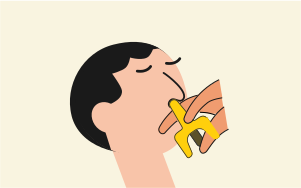
Administer Naloxone, spray one dose into the nostril.
If using the injection, inject one dose into the outer shoulder or thigh muscle. Note the time of administration. If no response after 2-3 minutes, repeat the dose.
03
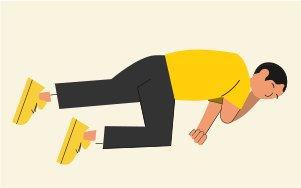
Place in recovery position, and stay until help arrives
Ensure the airway is clear and the person is on their side.
Learn recovery positionIt is important to recognise the symptoms
Knowing what to look for can be life-saving. Let's learn what to watch for:

Being extremely drowsy/veryhard to wake up (like a deepsleep) or being slumped over

Struggling to breath, snoring or gurgling

A blue tinge to the lips or nails

Pinpoint pupils

Being cold and clammy